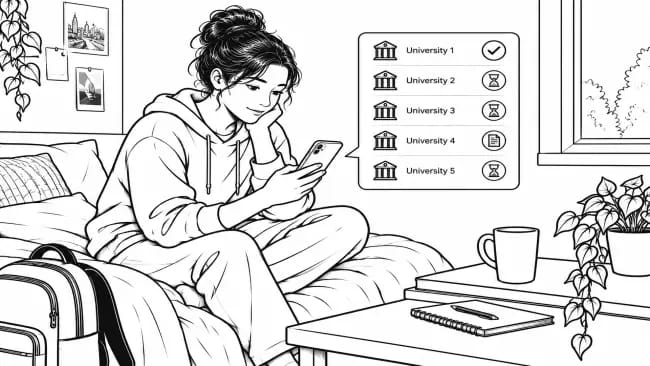
Once UCAS has your application, your universities start reviewing it. Keep an eye on messages, deal with anything they ask for, and don't read too much into one choice replying before another.
If you apply through a school or college, this stage starts when your centre sends the finished application to UCAS, not when you first send it to the centre. UCAS then checks and processes the application before sending it to your chosen universities and colleges. UCAS says processing can take up to 48 hours. When the checks are complete, you receive a welcome email and can follow the application in your UCAS Hub.
Each university reviews the application for the course you chose. It sees your qualifications, Personal Statement responses and reference, then considers them alongside any other evidence the course requires. Some universities send an acknowledgement when the application arrives, sometimes with access to an applicant portal; others contact you only when they need something or have reached a decision. An acknowledgement confirms receipt and doesn't predict whether you'll receive an offer.
If a university needs something else from you
Most undergraduate courses don't use interviews. If one of your choices does, University Interviews: What Happens After You Apply? explains where invitations might arrive and how universities arrange the interview. Follow the instructions you receive, including any deadline for confirming the date or providing material beforehand.
Some courses ask for a portfolio, audition, supplementary form, qualification evidence or another assessment. Check the course page and any message from the admissions team for the deadline and the route for responding. Submitting the UCAS application doesn't automatically complete a separate requirement set by the university or an assessment provider, so contact the admissions team if a request is unclear and keep a copy of anything important you submit.
Follow messages as well as the UCAS Hub
The Hub shows each choice and records the decision once a university sends it to UCAS. Emails and university applicant portals can carry interview invitations, document requests and other instructions before a decision appears there, so check the email account attached to your application, including the junk folder, and make sure you can sign in to any applicant portal a university gives you. Repeatedly refreshing the Hub won't show anything new until a university sends an update.
Keep your postal address, phone number and email address current. If you find a qualification error, need to change one of your choices or spot another problem in the application, How to Change Your UCAS Application After Submitting explains what you can change yourself and when UCAS or the university has to act. Deal with a genuine error when you find it instead of waiting to see whether a university notices.
When universities have to decide
A quick decision from one university doesn't tell you when another will reply. A course may compare applications after the equal consideration deadline, finish interviews or assessments, or work through applications in batches.
For 2027 entry, universities have until 12 May 2027 to decide on applications received by the 13 January equal consideration deadline. For applications received after 13 January but by 30 June, the later decision deadline is 14 July. If a choice is still outstanding after its deadline, UCAS marks it unsuccessful.
Contact a university when you need clarification about a request, when an important change affects your application, or when its published instructions tell you to get in touch. A routine progress query before the decision deadline won't make the course assess your application sooner.
When decisions start to arrive
When a university decides, the result appears in your UCAS application. The university may offer you a place, tell you that your application was unsuccessful, or withdraw the choice. You don't need to reply simply because one offer arrived before the others.
When no choice is still awaiting a decision, you can reply to any offers and UCAS shows your personal reply deadline in the Hub. UCAS Offers and University Decisions Explained explains what each type of decision means and what you need to check before replying. Until then, if nothing requires action, wait for the decision.